
What to take away
- Identify the interfaces that need machining and leave other surfaces explicitly defined.
- Review stock allowance, workholding and inspection references as one plan.
- Assign responsibility for the complete casting-to-machining handoff.
Start with interfaces, not an all-over machining note
Investment casting and machining can play different roles within the same component. The Investment Casting Institute design guide describes designs that retain cast geometry while limiting machining to critical areas. Whether that approach works for your part requires a drawing-specific review.
Mark bores, threads, mating faces and other features that must satisfy the final assembly requirements. Also identify surfaces intended to remain as cast. This gives the supplier a defined machining scope and avoids treating every contour as a finished interface by default.
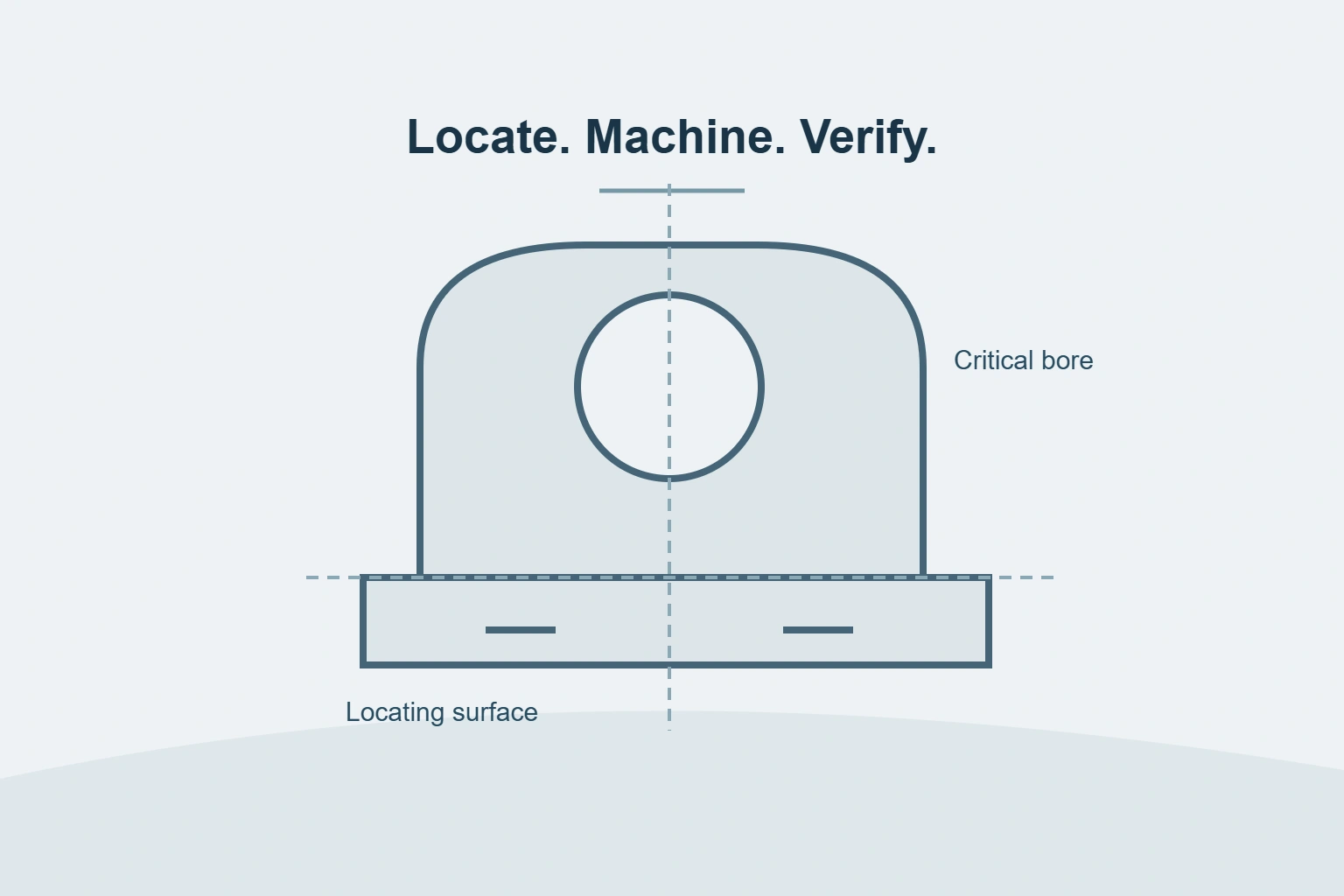
Review how the casting will be located and held
Ask the machining team to explain its proposed first locating surfaces and how later operations relate to the final datums. Provide enough context to show how the component sits in its assembly, particularly where several interfaces must align.
- Where can the casting be held without using a protected surface?
- Which surface establishes the first machining reference?
- Can tools and inspection equipment access each required feature?
- Do visible or thin areas require special handling considerations?
Resolve concerns with the designer before tooling is fixed. Record any agreed locating pads or geometry changes on controlled documents.
Let the casting and machining plans define the allowance
Machining allowance is material intentionally left for subsequent removal. Ask the supplier to propose it for each relevant surface, considering the casting geometry, locating approach and final requirement. A single assumed allowance is not an engineering review.
Confirm who owns the casting-stage geometry and how it relates to the finished model. If different organizations cast and machine the part, require them to agree this handoff directly. The buyer should receive a clear, coordinated proposal instead of being left to reconcile incompatible assumptions after samples arrive.
Review the complete operation sequence
List the required material condition, machining operations and surface processing. Ask the supplier to propose their sequence and identify the stage at which each acceptance requirement will be checked. Confirm that the final inspection plan refers to the delivered condition.
Separate functional texture callouts from decorative appearance. Identify surfaces that must be protected, kept free of a specified coating or assessed against a reference sample. Do not assume that a general polishing or finishing note also defines the condition of threads, bores and mating faces.
Assign responsibility at the casting-to-machining handoff
A complete quotation should explain who checks the incoming castings, who performs machining and who approves the finished part. If operations are subcontracted, ask the primary supplier to identify its coordination and documentation responsibilities.
Agree the information that travels with each batch, including identification, revision and required records. Decide how a problem found during machining will be reported and reviewed. The goal is a traceable issue-resolution process, not an assumption that the last company to touch the part owns every possible discrepancy.
Approve samples in the intended delivery condition
Review sample components after the agreed manufacturing sequence, accompanied by the specified results. Check the relationship between machined interfaces and retained cast geometry, not only the size of each machined feature in isolation.
Record any approved process or drawing changes before recurring production begins. Retain the finished drawing, casting-stage agreement and inspection plan together. For the next enquiry, provide this complete package so the quotation covers a usable component rather than disconnected casting and machining line items.
Apply this to your component.
Share the drawing, material and finished-part requirements so the manufacturing route can be reviewed together.