
Why Choose Investment Casting?
Investment casting can combine several features into a near-net-shape component and accommodate geometry that would otherwise require several manufacturing steps. The proposed route still needs to balance material, tooling, production quantity, secondary machining and inspection.
Key Features
| Review area | What to define in the enquiry |
|---|---|
| Geometry | Review integrated features, transitions and access for finishing. |
| Part weight & dimensions | Confirm company-specific limits after reviewing the drawing. |
| Design freedom | Discuss the features that can remain as-cast and those needing machining. |
Compatible Materials
View the materials library for specified alloy families. Do not interpret a listed material family as approval for every grade or process condition.
What Is Investment Casting?
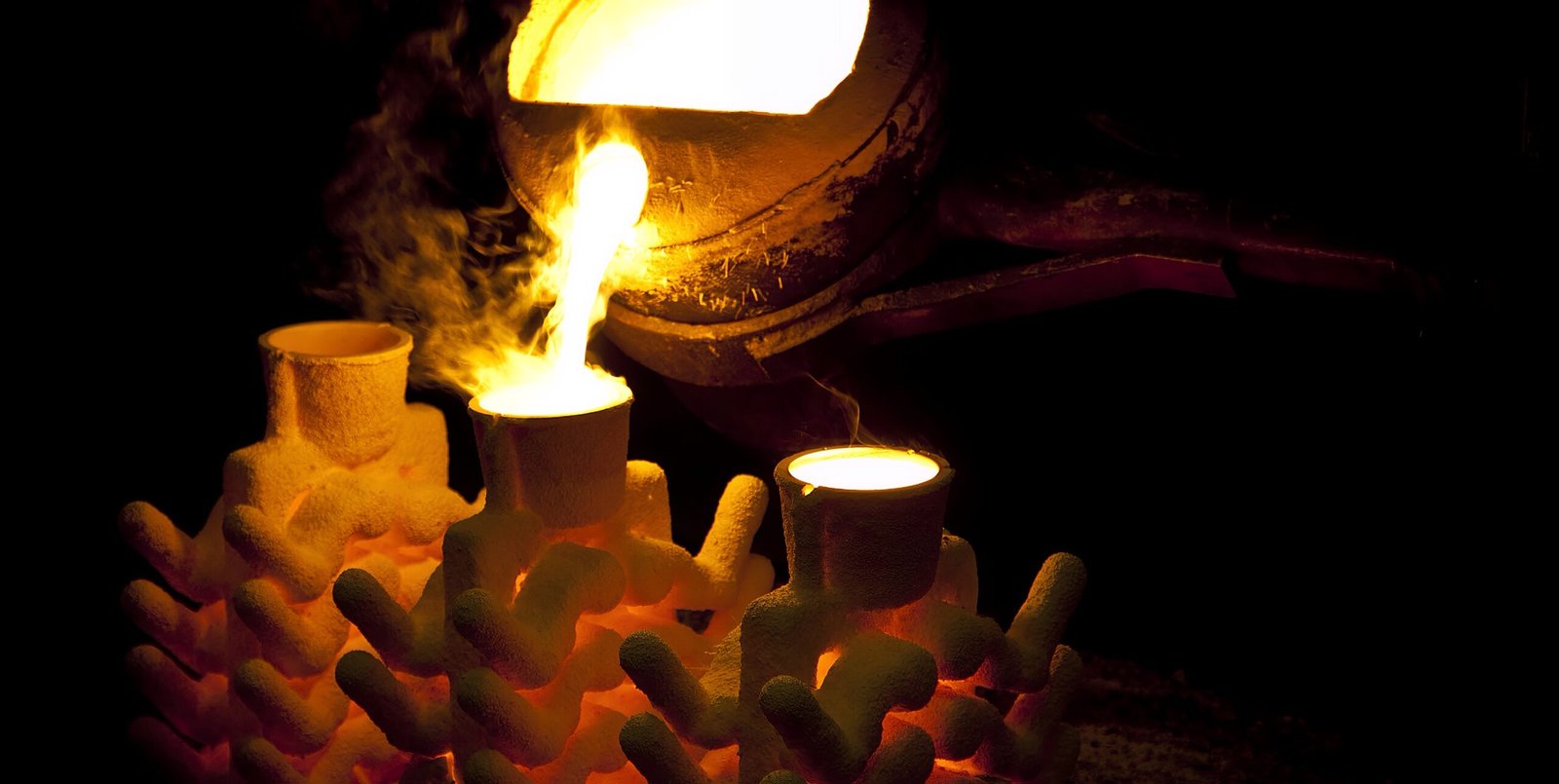
A sacrificial pattern defines the part cavity. A refractory shell is prepared around it, the pattern is removed, and metal is cast into the resulting mold. After solidification, the shell and feed system are removed and the part is finished to the agreed requirements.
10-Step Investment Casting Guide (From Wax to Metal)
- 01
Step 1: Solidification review & engineering planning
Review the drawing and expected filling and solidification behavior. Computer analysis may support this stage when available and appropriate.
- 02
Step 2: Tool design & manufacture
Plan the pattern tooling from the agreed part geometry, shrinkage considerations and machining needs. Confirm the tooling and sample-approval scope.
- 03
Step 3: Wax injection & pattern assembly
Produce the patterns, check the relevant features and assemble the feed arrangement for the proposed process route.
- 04
Step 4: Shell building
Apply and dry the refractory layers that form the casting shell. The binder route and processing conditions depend on the agreed manufacturing plan.
- 05
Step 5: Dewaxing, firing & mold preheating
Remove the wax and prepare the shell for casting. Dewaxing and firing are essential parts of the route; a furnace-preheating label alone should not omit them.
- 06
Step 6: Metal pouring
Prepare the specified alloy and pour into the prepared shell using the approved route and process controls.
- 07
Step 7: Shell removal & part separation
After solidification and cooling, remove the refractory shell and separate the cast components from the feed system.
- 08
Step 8: Casting finishing
Remove feed attachments and clean the casting surfaces. Identify areas requiring subsequent operations or inspection.
- 09
Step 9: In-house secondary machining
Finish drawing-defined interfaces through CNC machining. Coordinate treatment and surface processing with final dimensional acceptance.
- 10
Step 10: Final review & delivery
Complete the agreed inspection and documentation, approve the delivery condition and package the components for shipment.
Scalable Production Planning & Automation
Plan tooling, batches, process control and repeat-order requirements around the expected demand. Automation level, production capacity and lead time must be confirmed with the manufacturing team; another foundry’s automated system is not a toway capability claim.
Design for Manufacturing (DFM)
Review the DFM guide for section transitions, access, machining stock and drawing handover. Resolve the critical questions before tooling approval.