What to take away
- Provide a controlled drawing package and explain how the component is used.
- State exact requirements where known and label open questions explicitly.
- Request an itemized reply with assumptions, exceptions and approval milestones.
1. Send a consistent drawing and model package
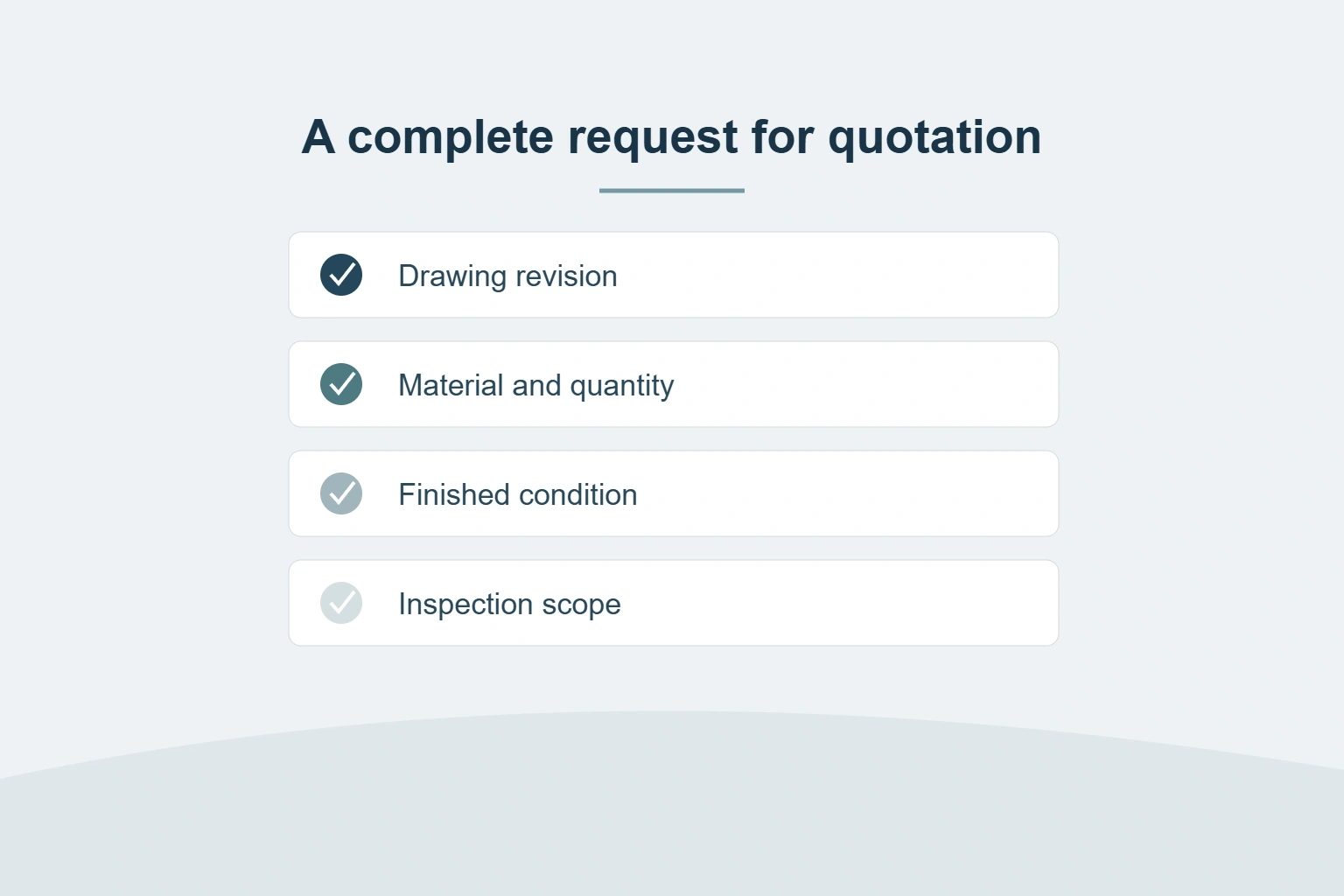
Include the current drawing and a usable three-dimensional model when available. State the part number, revision, units and quantity of distinct components. Check that filenames and document revisions agree before sending the package.
The drawing should identify dimensions, datums, threads and notes that control acceptance. Tell the supplier which document governs if the model and drawing differ. If the design is preliminary, label it accordingly and explain whether you need a budget estimate, manufacturability feedback or a quotation for an approved production design.
2. Define the material and service context
Provide the exact material specification, grade and required final condition when they are known. Do not rely on a broad family name as the complete purchasing requirement. If a material decision is still open, request a review rather than implying that any substitute is acceptable.
- What does the component do in the assembly?
- What exposure or operating conditions must the designer consider?
- Are specific material records or identification required?
- Are substitutions prohibited or subject to written approval?
Only share information you are authorized to disclose; agree an appropriate channel for confidential files.
3. Mark the required delivery condition
Say whether you are buying a casting or a finished component. Identify every required machining operation, material treatment and surface process, with their governing specifications where applicable.
Mark critical interfaces separately from general as-cast geometry. Specify visible surfaces and reference samples for appearance when needed. Include any protection, marking or packaging requirements that affect delivery. If the supplier may propose alternatives, ask it to quote the specified route first and present alternatives separately with the differences clearly explained.
4. Distinguish samples, first order and repeat demand
List the sample quantity, initial production quantity and expected repeat-order pattern. Separate firm requirements from forecasts. An annual estimate should not be mistaken for one confirmed production release.
Give the desired delivery location and target milestones, including any customer review period. Ask the supplier to explain when its proposed schedule starts and which approvals it depends on. If timing is uncertain, request a milestone-based proposal rather than an unsupported promise tied to an unspecified order date.
5. Explain how parts will be accepted
List the dimensional reports, material documentation, inspection or testing you require. Include methods and acceptance criteria when your specification calls for them. Ask the supplier to flag any requirement it cannot confirm.
- Which features need recorded sample results?
- Who approves appearance and functional samples?
- What identification or traceability must be retained?
- Which checks apply to recurring production?
- How should proposed deviations be submitted?
Do not assume a certificate, special test or customer-specific approval is included merely because the application belongs to a particular industry.
6. Ask for a structured quotation and exception list
Request separate prices for tooling, samples, recurring parts and optional services. Ask for quotation validity, delivery basis, payment assumptions and tooling terms. Keep the supplier's exclusions beside the commercial figures during review.
Finish the RFQ with a simple response request: confirm the document revision, list assumptions, identify exceptions and name the questions blocking a firm quote. Assign an owner to each open item. Once resolved, save the agreed package as the starting point for the purchase order and sample approval.
Apply this to your component.
Share the drawing, material and finished-part requirements so the manufacturing route can be reviewed together.