
Purpose and material
Describe what the printed part must demonstrate. Confirm whether material appearance, dimensional fit or functional performance is the priority.
Discuss additive manufacturing routes for concept models and functional prototypes. Material, process choice and post-processing depend on the specific design and intended use.
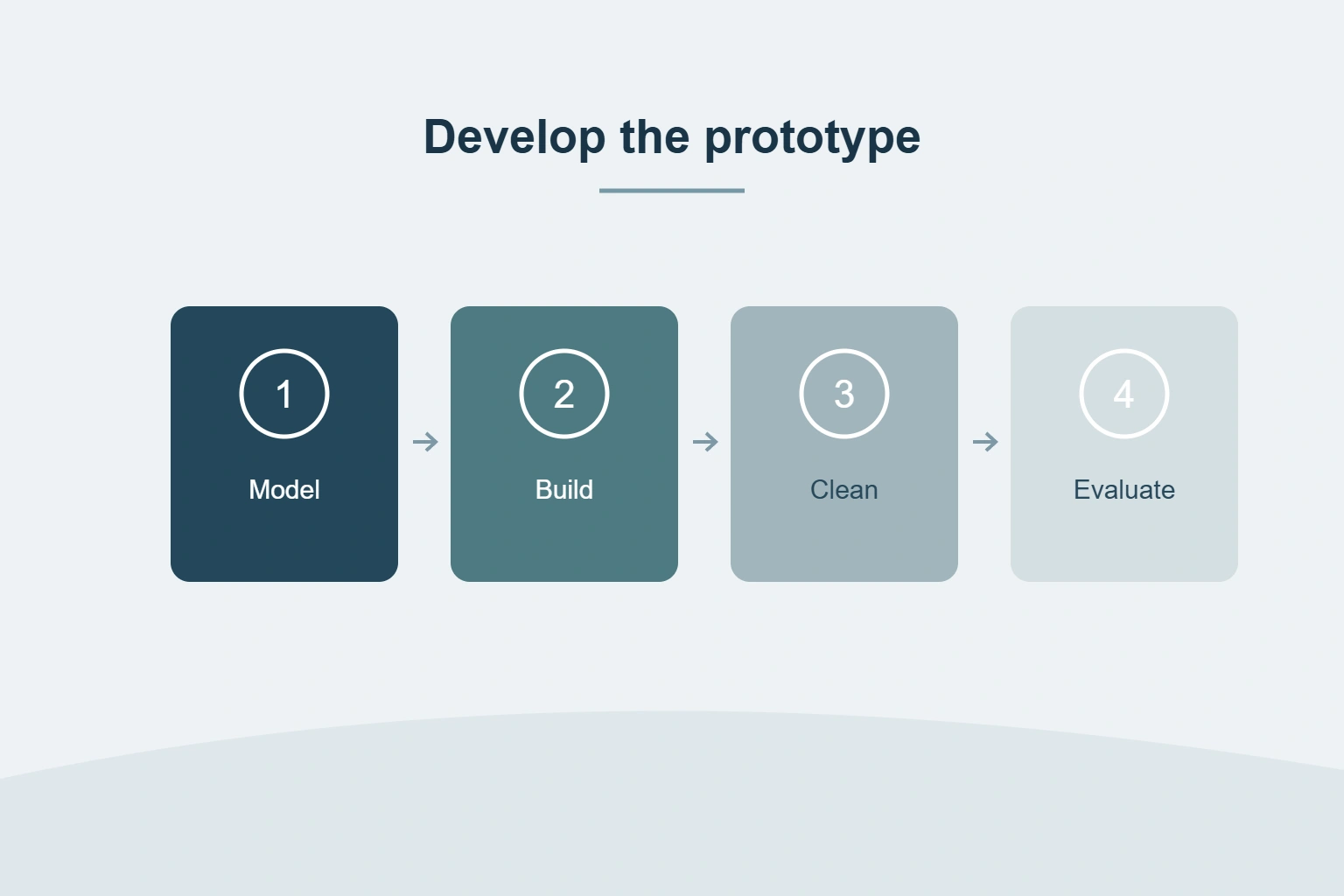
Geometry, material and acceptance requirements guide the route.
Describe what the printed part must demonstrate. Confirm whether material appearance, dimensional fit or functional performance is the priority.
The original service page mentions SLA, SLS, FDM and MJF. Confirm which route is available and appropriate for your geometry and project.
Review supports, accessible surfaces and any secondary finishing requirements. Agree what will be supplied and how it will be accepted.
Share the model revision, quantity and acceptance criteria. A printed prototype should not be assumed to match the properties of the final production route.
Share the controlled drawing and CAD file, material, quantities and required delivery condition. Confirm the manufacturing scope, sample plan and inspection requirements with the quotation.
Explore related guidance ↗Match the proposed finish to the specified alloy or polymer and its final condition.
Identify sealing faces, fits, threads and any surfaces that must be masked or protected.
Agree on the texture, colour and reference sample before approving production.
Put measurable finish and inspection requirements on the drawing or purchase specification.
Send the model or drawing, quantity, material and finish requirements. We will review the project scope before quoting.
Updated from the original service content. Equipment counts, fixed quote-response times, universal tolerance limits and cost-saving percentages require verification before publication.