The short answer: compare three routes, not two
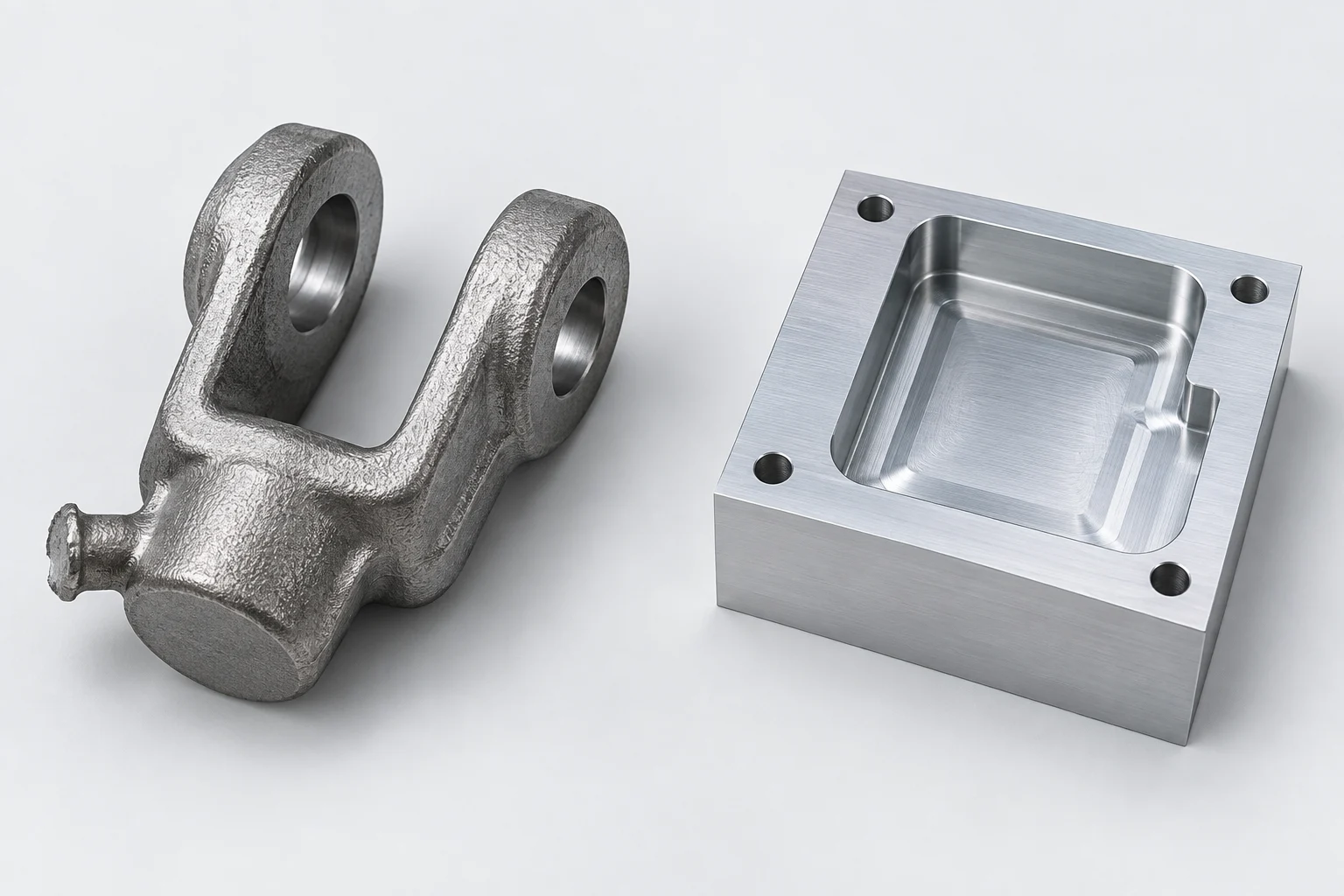
Investment casting creates a near-net-shape metal component using an expendable wax pattern and ceramic mold. CNC machining removes material from a workpiece to produce the required features. For a sourcing decision, distinguish machining from solid stock from machining an existing casting.
Consider casting when the geometry offers useful near-net-shape opportunities. Consider CNC from solid when an evolving design, accessible features or the first-order schedule make it a practical starting point. Consider casting plus CNC when the body benefits from casting but bores, threads or mating faces need controlled secondary machining. None is an automatic winner.
Investment casting
Evaluate the body geometry and the features that can remain as cast.
CNC from solid
Evaluate stock availability, tool access, setups and material removal.
Casting + CNC
Cast the form, then machine the drawing-defined interfaces.
Investment casting vs CNC machining at a glance
Use these questions to scope a quotation, rather than treating a process name as proof of capability. “CNC” here means machining from solid; the third column keeps the hybrid option visible.
| Decision factor | Investment casting | CNC from solid | Casting + CNC |
|---|---|---|---|
| Geometry | Review wax tooling, shell formation, filling and part removal. | Review cutter access, workholding and the number of setups. | Allocate body geometry to casting and accessible interfaces to machining. |
| Upfront work | Allow for tooling development and sample approval. | Allow for programming, setup and any dedicated fixtures. | Coordinate casting tooling with machining datums and fixtures. |
| Critical dimensions | Agree achievable as-cast requirements feature by feature. | Verify the specified features against the machining and inspection plan. | Reserve stock and define datums for CNC-finished features. |
| Design revisions | Review the impact on tooling and sample approval. | Review programs, stock and fixtures; changes are not cost-free. | Control both the casting and finished-part drawing revisions. |
| Cost comparison | Include all work needed after the raw casting. | Include material, setups, machining and required finishing. | Quote the accepted component, not just the casting blank. |
| Delivery planning | Separate first samples from repeat production. | Confirm stock availability, machine capacity and inspection. | Confirm the complete sequence and who owns each handoff. |
On smaller screens, swipe the table to compare all three routes.
Which costs less? Start with the finished part
A low casting price is not a fair comparison with a fully machined part if it excludes heat treatment, machining, finish or inspection. Put both proposals against one drawing revision, material specification, accepted condition and delivery basis. Include tooling ownership, sample work and any recurring setup charges.
For an initial screening, let F be the one-time charges, U the recurring finished-part unit cost and N the quantity. Then total cost = F + N × U. Where unit costs differ, the mathematical crossover is N = (Fcasting − FCNC) / (UCNC − Ucasting). A positive crossover is not a purchasing recommendation: it assumes unchanged prices, scope and quantities.
A tooling-intensive route may recover its initial investment over repeat orders, but material removal, complexity, scrap assumptions and inspection can change the comparison. Never borrow a break-even quantity from a different part—or from a die-casting article. Use the calculator below with your own quotes, then review the assumptions with the supplier.
For a broader quotation checklist, read what makes up investment casting cost.
Assign precision to the features that need it
“Which process is more accurate?” is too broad to settle a component specification. Instead, mark the fits, sealing surfaces, thread locations and datum relationships that control function. Keep non-critical body dimensions separate from assembly interfaces. State the final material condition and whether dimensions apply before or after treatment and finishing.
The concept below illustrates the conversation: a cast body supplies the form, while selected features are candidates for CNC finishing. It is not a production drawing or a statement of toway casting’s numerical capability. Machining access, holding strategy, stock allowance and measurement method still need engineering review.
- Cast body geometry
- Bore / mating fit
- Mounting face
- Hole location / thread
Do not treat a single tolerance or surface-roughness number as a blanket promise across all alloys and geometries. Ask for drawing-specific commitments and an agreed sample inspection report. Our investment casting tolerance guide explains how to structure that discussion.
Check the material, revisions and first-order schedule
A similarly named cast alloy and wrought stock grade should not be treated as interchangeable without review. Identify the required specification, condition, service environment and acceptance evidence. Confirm that the proposed material form and processing route satisfy the design requirement before comparing prices.
For the schedule, ask for dates for design review, tooling or setup, samples, approval, production, secondary operations and inspection. A first order and a repeat order have different dependencies. CNC can avoid casting-tool development, but stock procurement, fixtures or inspection may still govern delivery.
If the design is still changing, ask which revisions would affect the tooling, programs and approval status. A machined prototype can answer some fit questions; it does not automatically validate the production casting route, material condition or process-dependent performance. Define what the prototype is intended to prove.
When casting and CNC machining belong together
Imagine an architectural mounting bracket with a shaped body, an exposed surface and a set of installation interfaces. This is a hypothetical design discussion, not a customer case. Ask which contours can stay as cast, which faces need machining and how the chosen finish affects the assembly. For marine hardware, add the specified corrosion environment and material requirements rather than assuming the same solution applies.
The advantage of reviewing casting and machining together is coordination: machining stock, fixture location and datum access can be addressed before tooling. That can avoid discovering an inaccessible feature after casting. It does not eliminate sample approval or make every hybrid route economical.
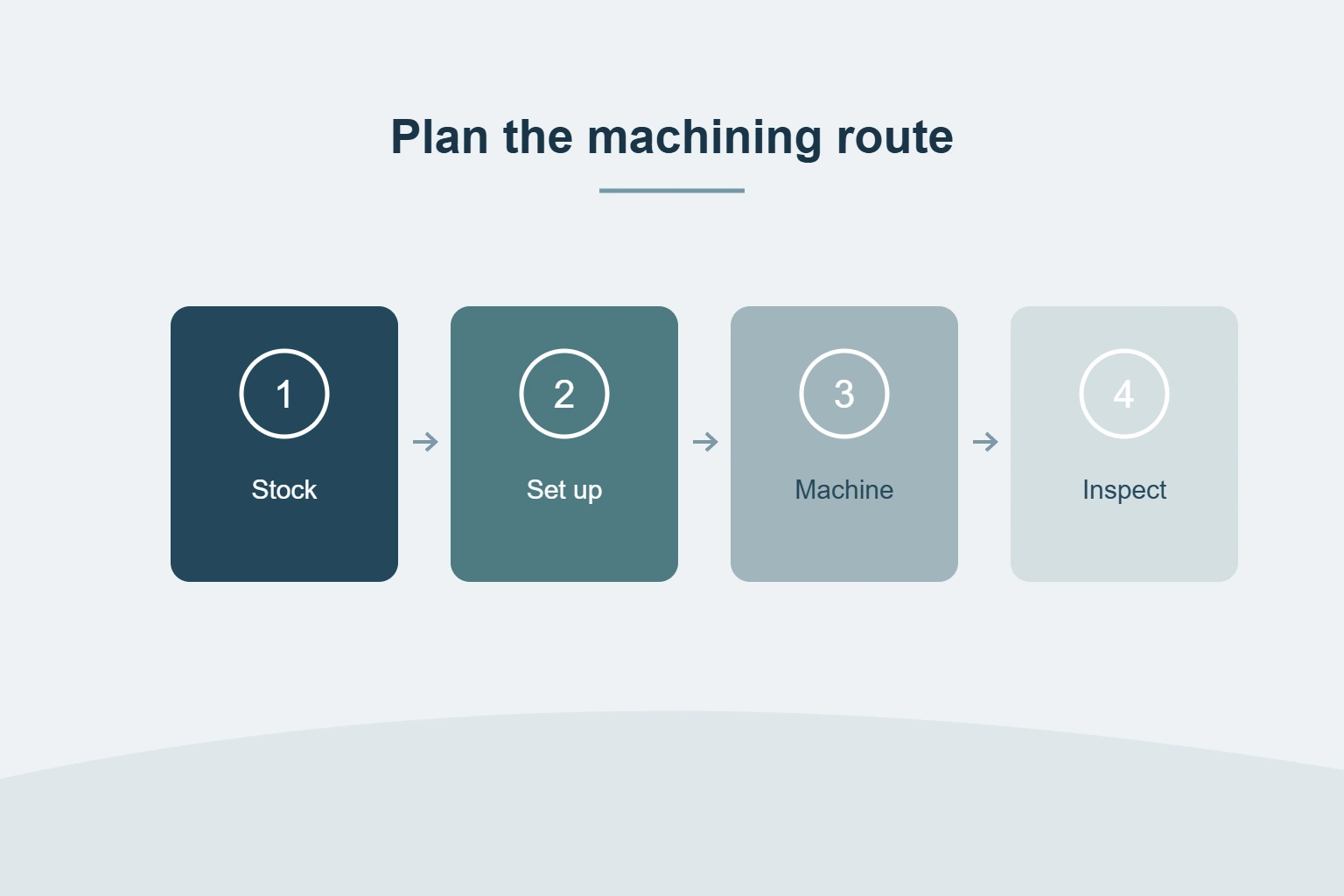
- 01Review the drawingFunction, alloy, datums and acceptance
- 02Develop the castingTooling, near-net shape and machining stock
- 03Finish the interfacesCNC operations and specified treatments
- 04Verify the partDimensions, material records and approval
探求する CNC machining for investment cast components, or see how drawing-led enquiries are organized for architectural hardware and marine hardware.
Send an RFQ that makes the routes comparable
Request alternatives against the same finished drawing and ask each supplier to identify assumptions. A clear enquiry should contain:
- Geometry: the controlled 2D drawing, 3D model and revision.
- Material: specification, condition and any required test records.
- Demand: sample quantity, batch sizes and forecast—clearly distinguished from committed orders.
- Acceptance: critical dimensions, datums, surface finish and inspection scope.
- Commercial scope: tooling, fixtures, secondary work, packaging and delivery basis.
- Schedule: the required sample date, approval steps and production need.
Ask for one-time and recurring charges separately, with exclusions stated. A proposal should explain where casting, machining or a combined route fits your component—not simply promise that its preferred process is always better. Use the complete investment casting RFQ checklist before sending the package.
Frequently asked questions
Is investment casting cheaper than CNC machining?
Not in every case. Compare the same accepted component and order quantity, including development, secondary operations and inspection. A low raw-casting price alone does not establish the lowest finished-part cost.
Does an investment casting still need machining?
It can. The drawing determines whether bores, threads, faces or other features need secondary machining. Some features may be acceptable as cast while others need a defined machining operation.
What quantity makes casting worthwhile?
There is no universal threshold. Tooling, alloy, geometry, recurring cost and future demand all matter. Use actual quotations and treat forecasts as assumptions, not guaranteed production orders.
Can CNC machining meet tighter tolerances?
CNC is often used to finish critical features, but achievable accuracy depends on the feature, material, setup and inspection method. Obtain a drawing-specific commitment rather than applying one published number to every dimension.
Can I replace a machined part with a casting?
Possibly, after a design and material review. Check geometry, functional requirements, machining stock, material condition and qualification obligations. Reconfirm acceptance for the new route instead of assuming the existing approval transfers.
Let the drawing decide.
Share your material, quantities and finished-part requirements. Ask toway casting to review casting and CNC machining together.
Sources & further reading
Original purchasing guidance, informed by the manufacturer resources below. Protolabs discusses casting broadly, including die casting; its numerical examples are not used as investment-casting thresholds.
Editorial draft prepared 24 September 2026. Engineering review and approval are required before publication. No universal price, tolerance or lead-time capability is asserted.