THE QUICK ANSWER
Plan the finished component.
Evaluate the casting, machining and acceptance requirements together. Use a controlled drawing to establish what must be delivered, then ask suppliers to explain how they will achieve it.
01 / PROJECT DECISIONS
Understand what the process delivers
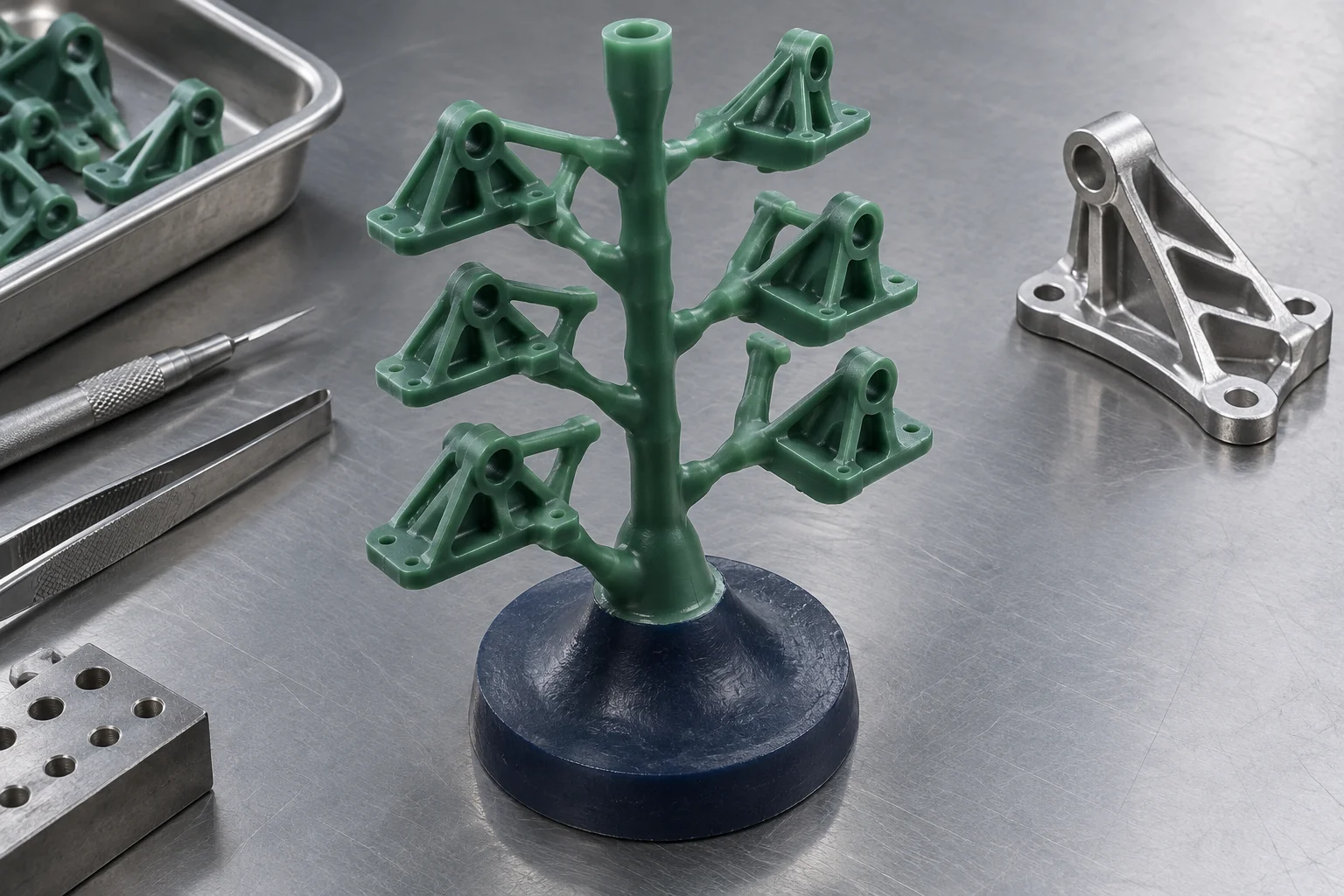
Precision investment casting forms a metal component using an expendable pattern and a ceramic mold. It is often called lost-wax casting. The wax is removed before metal is poured; after solidification, the ceramic shell is broken away. Near-net shape describes the starting geometry, not a promise that every surface is ready for assembly.
01
Pattern
Produce and inspect the wax pattern, then assemble the casting tree.
02
Shell
Apply ceramic slurry and refractory grains in successive coats, with drying between layers.
03
Cast
Remove the wax, prepare the shell, pour the alloy and allow it to solidify.
04
Finish
Remove the shell and gates; complete the specified treatment, machining and inspection.
This sequence is described in Engineered Precision Casting’s process overview and the Investment Casting Institute’s shell-building explanation. The route for an individual part still needs a foundry review.
02 / PROJECT DECISIONS
Compare the finished part, not just the casting
Use investment casting as a candidate route when geometry is difficult to cut from stock, several features can be combined in one body, or a repeat order can justify tooling. Those are reasons to investigate it, rather than proof that it is the lowest-cost choice.
Casting + machining
Ask for a quotation that includes the finished interfaces, not only the rough casting. Check which surfaces remain as cast.
Machining from stock
Ask for a comparison when quantities are small, geometry is accessible or the design is still changing. Include material removal and setup costs.
Other forming routes
If forging, fabrication or another casting process is also feasible, compare the same alloy requirements, acceptance scope and delivered quantity.
Our suggested comparison method is to use one drawing revision and one inspection requirement for every quotation. Ask each supplier to identify exclusions explicitly. A cheaper line item is not useful if another supplier has included operations that it omits.
03 / PROJECT DECISIONS
Specify the cast alloy and its final condition
A material family is a starting point. “Stainless steel” alone does not define a purchasing specification. Identify the required cast grade, applicable specification, heat-treatment condition and any required property verification. If a drawing starts from a wrought-material designation, have the cast-material proposal reviewed rather than assuming a direct substitution.
Milwaukee Precision Casting’s stainless-steel casting overview illustrates why alloy selection is part of the application discussion. For your RFQ, describe the operating environment, temperature, contact media and cleaning conditions. The proposed material must be assessed against those requirements, not selected from a family name alone.
For an initial discussion of stainless hardware, see our 304 vs 316 material guide. Confirm the exact cast specification and final condition on the order.
04 / PROJECT DECISIONS
Review the geometry before committing to tooling
Look closely at abrupt section changes, isolated heavy regions, internal corners and difficult-to-access cavities. These features affect more than the outline of the component: they influence filling, solidification, shell production and cleaning. A drawing review may lead to smoother transitions, revised radii or a different way of producing an internal feature.
Zeren’s investment-casting design guide discusses wall transitions, holes, pattern removal and machining datums. Its guidance is a useful review agenda, but numerical rules from a general article should not become acceptance criteria for an unrelated part.
Before approving a tool, request a marked-up drawing showing proposed changes, gate-removal areas and any features that will be machined. Record who approves the functional effect of each change. Keep the approved drawing revision with the tooling order.
05 / PROJECT DECISIONS
Separate casting tolerances from machined requirements
A process described as precise still has feature-dependent capability. Identify the dimensions that locate the part, control a fit, form a seal or determine the assembly stack. Agree whether those requirements will be achieved as cast or through secondary machining. Also define where the part will be held and how the finished features will be measured.
Texmo Blank’s design guidelines emphasize tolerances, assembly and machining needs. The practical takeaway is to discuss them together. No single tolerance number can describe every size, alloy and geometry, and a foundry’s published range is not automatically a commitment for your drawing.
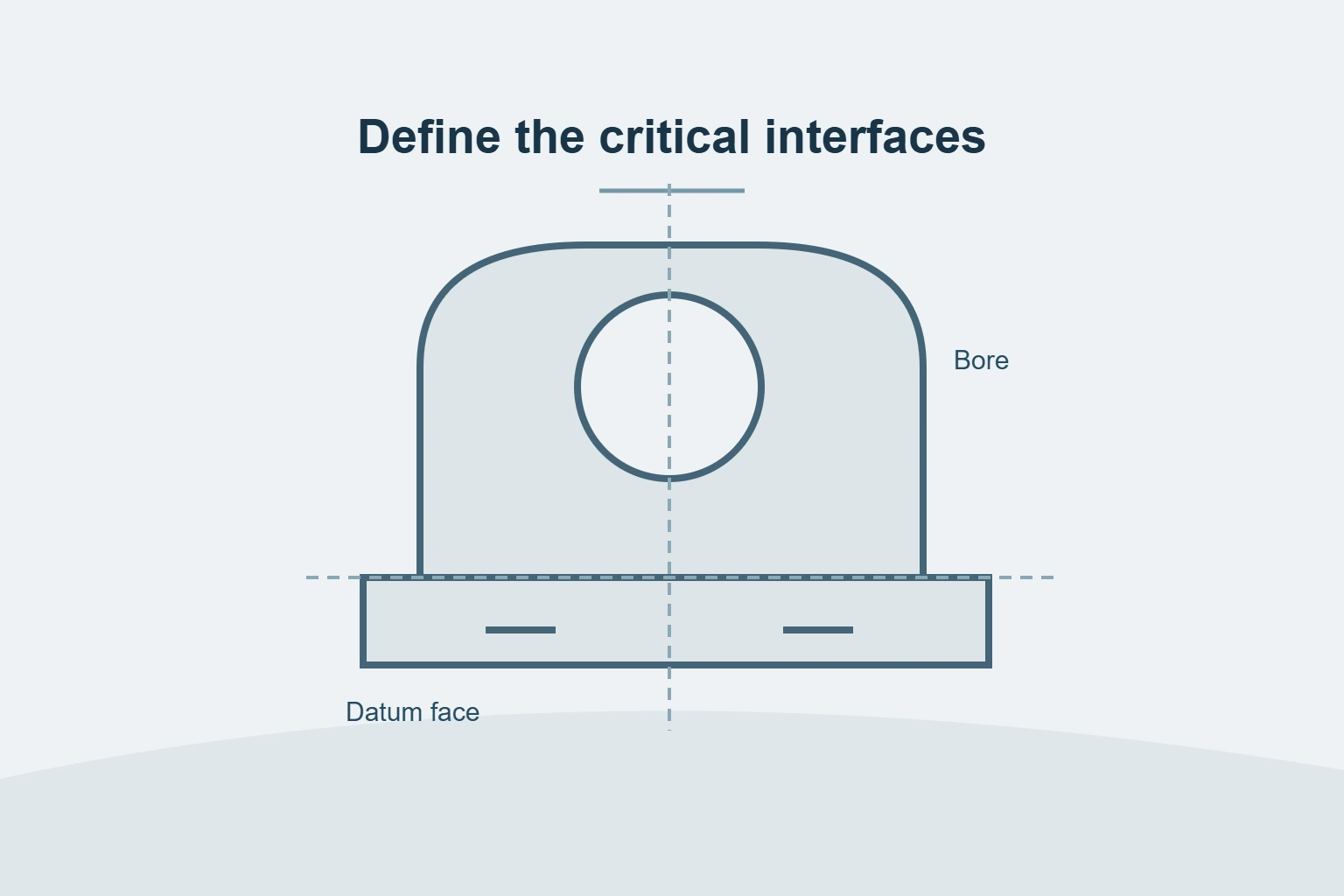
Casting and CNC machining should be planned as one manufacturing route. Image: existing toway casting website library.
Review critical machining interfaces before deciding the stock allowance and inspection datums. Ask the supplier to identify any requirements that remain unresolved.
06 / PROJECT DECISIONS
Define acceptance before comparing prices
For procurement, we suggest turning “good quality” into a short acceptance matrix. List each requirement, the evidence requested and the party responsible for approval. This is a purchasing framework, not a universal testing standard: the drawing, application and agreed specification determine what is necessary.
Material
Which grade and condition are ordered? What material records must accompany the lot?
Dimensions
Which features appear in the sample report, against which revision and datums?
Surface & integrity
What appearance or surface requirements apply? If testing is required, specify its method, coverage and acceptance criteria.
Delivery scope
Are machining, treatment, finishing, packing and required documentation included in the price?
Then separate tooling and other one-time charges from recurring part costs. Record quantity assumptions, sample approval stages and the consequences of a drawing change. Our casting-cost guide explains how to compare quotation scope.
07 / PROJECT DECISIONS
Send a complete, revision-controlled RFQ
A useful enquiry lets a foundry review the manufacturing route without guessing which information takes priority. The following package is our suggested starting point:
- Geometry: a dimensioned drawing and, where available, a 3D model using the same revision.
- Material: the specified cast grade, condition and relevant requirements.
- Quantity: sample, first-order and anticipated repeat-order volumes.
- Critical features: fits, datums, machined areas and surface requirements.
- Acceptance: inspection, testing, documentation and sample-approval scope.
- Schedule: required milestones, destination and packing expectations.
If information is preliminary, label it clearly and ask the supplier to list assumptions in the quotation. A technically useful response should explain the proposed route, identify open questions and distinguish confirmed scope from items requiring review.
Frequently asked questions
Is precision casting the same as investment casting?
In this guide, precision investment casting means the lost-wax process. “Precision casting” is also used as a broader commercial term, so specify the actual process when comparing quotations.
Does an investment casting always need CNC machining?
No. The drawing determines which features can remain as cast and which need additional operations. Discuss functional fits, sealing surfaces, threads and inspection datums before approving the manufacturing route.
Can a supplier quote from a photograph alone?
A photograph can help explain an application, but it does not define dimensions, tolerances, material condition or acceptance. Treat any early estimate accordingly and provide a controlled drawing before committing to a production specification.
Industry reading & references
This original guide draws on the public process and design resources below. Supplier-specific figures and certifications are not presented as toway casting capabilities.
START WITH YOUR DRAWING
Turn the requirements into a manufacturing discussion.
Send your drawing revision, material, quantity and critical requirements to the toway casting team for review.