
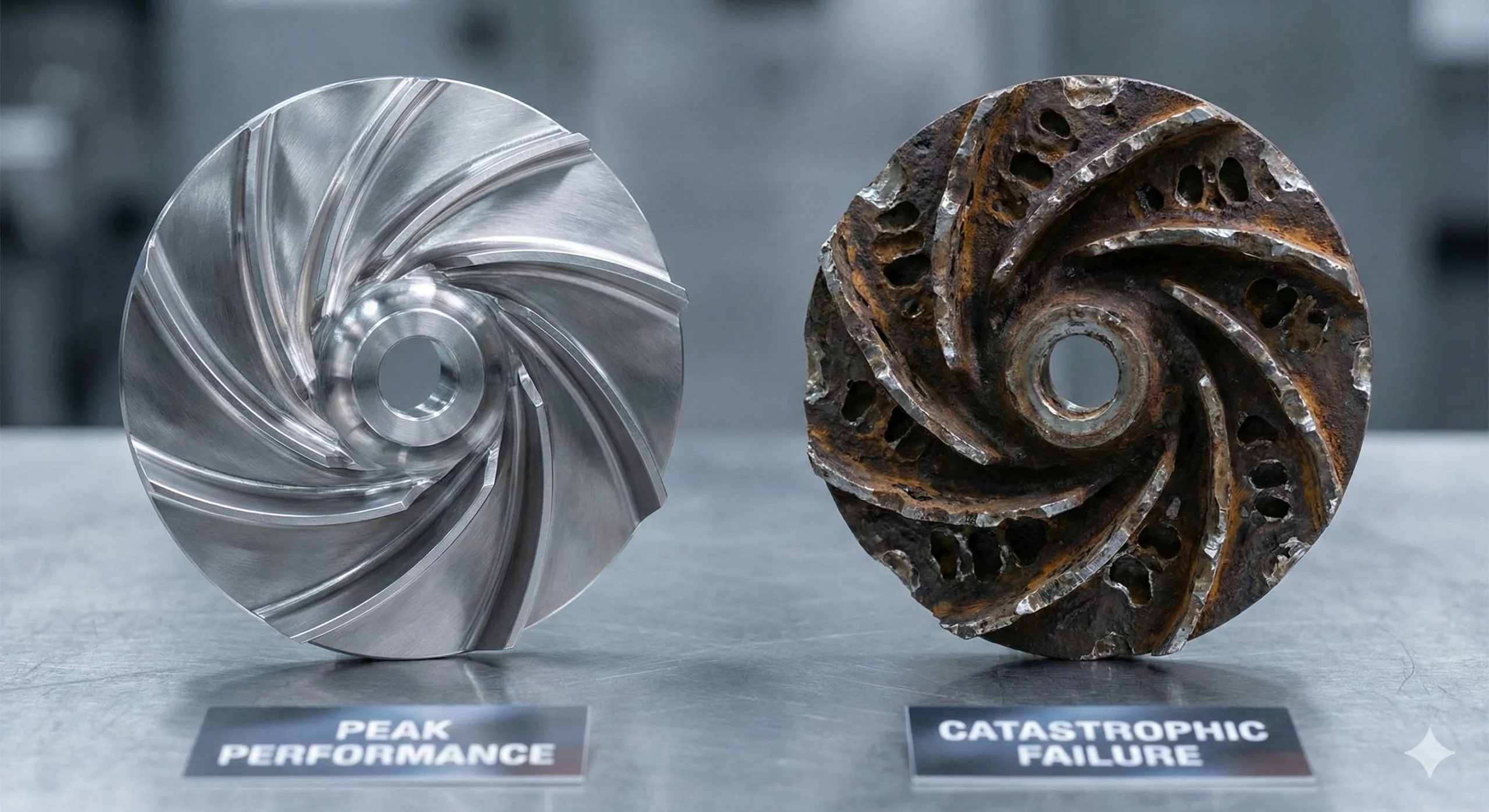
Start with the whole pump system
The original article highlights unusual noise, pressure changes, vibration and visible surface damage. These observations can prompt an inspection, but none alone establishes that the impeller is the sole cause. Consult the equipment documentation and a qualified maintenance specialist.
Record the operating symptoms
Document the conditions under which the noise or performance change occurs. Record the operating point and recent maintenance history, and identify any changes to the fluid or installation. Avoid replacing a component based only on a general online checklist.
Inspect safely and document the component
Follow the equipment manufacturer’s shutdown and isolation procedures before access. A competent specialist should review the impeller, connected components and system conditions. Photos of wear or damage can support the investigation, but do not replace a proper assessment.
Prepare a replacement enquiry
Once the replacement scope is established, provide the controlled drawing, alloy, dimensions, machining interfaces and any balancing or inspection requirements. Identify what must match the existing assembly and what can be reviewed.
Explore impeller component enquiries ↗From investigation to manufacturing requirements
toway casting can discuss the component specification and proposed manufacturing route. The part quotation does not replace equipment diagnosis or establish suitability for an entire pump system.