
ENGINEERING RESOURCES / toway casting
Investment casting design & resource guide
From a first drawing to a production-ready component. Review geometry, materials, machining and inspection in one practical guide for engineers and buyers.
6 design checks · 6 enquiry essentials · Process & buying guides

Start with the finished part: geometry, interfaces and acceptance.
DESIGN → CAST → MACHINE → VERIFY
FIND YOUR STARTING POINT
A clearer route through your project.
01 / DESIGN FOR MANUFACTURABILITY
Resolve the difficult features before committing to tooling.
Investment casting DFM connects the part’s function to pattern making, ceramic shell building, metal filling and secondary operations. Use these six checks as a drawing-review agenda.

01 / SECTION DESIGN
Balance wall thickness & transitions
Review isolated heavy areas and sudden section changes. Where function permits, use gradual transitions and consider ribs or cored features instead of adding solid mass. Minimum wall thickness depends on alloy, flow length and geometry; agree it for the actual part.
Mark the thinnest wall, thickest junction and any sealed cavities.

02 / CORNER DESIGN
Use purposeful radii & junctions
Blend sharp internal corners while keeping the assembly envelope and adjacent features in view. Large fillets can add local mass, so a larger radius is not automatically a better casting design. Review strength, feeding and access together.
Identify loaded corners, contact edges and surfaces that must remain sharp.
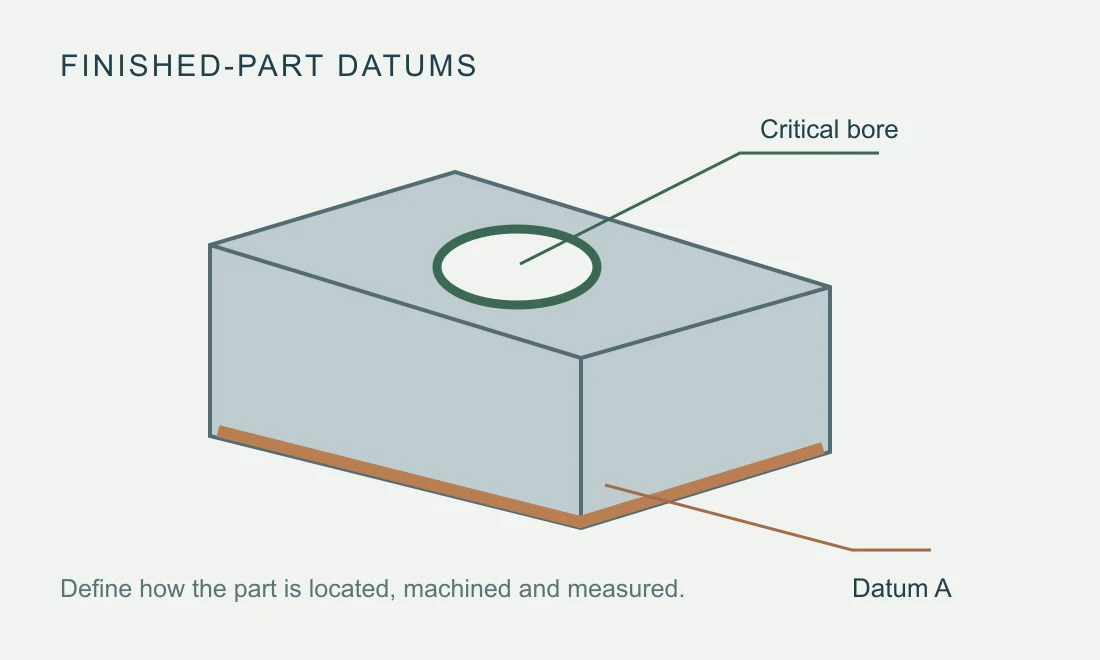
03 / DIMENSIONAL DESIGN
Give critical features a datum
Show how the component locates in its assembly. Establish the finished-part datums, then separate functional fits from general cast dimensions. Ask the supplier to review measurement access and the relationship between cast stock and machined surfaces.
Name the datum system, critical bores and acceptance dimensions.
04
Plan pattern release
For injected wax patterns, review tool opening direction, parting lines and removable tooling. Undercuts may need additional tooling features or a different pattern route. The ceramic shell is broken away after casting; metal-die ejection rules should not be applied to the finished casting by default.
05
Review holes, pockets & cores
Deep passages need a workable plan for creating the cavity and removing shell or core material. Check whether the feature is cast, cored or machined and whether it can be cleaned and inspected. Give the foundry space to propose a simpler route.
06
Agree gate & finishing locations
Identify sealing faces, visible surfaces and restricted areas before the gating concept is agreed. Discuss allowable gate removal, blending and witness marks. Note which surfaces may be changed and which must retain their final geometry.
Review principle: numerical wall limits, radii and achievable tolerances must be agreed for the alloy, geometry and process route. General design guidance is not a part-specific capability commitment.
02 / MATERIAL & PROCESS
Specify the alloy. Explain the environment.
Material selection begins with the operating conditions and the required final properties. Include temperature, corrosion exposure, loading and any applicable material specification.
Three details that make a material request useful
- Grade and specification: state the intended cast alloy and applicable standard or drawing requirement.
- Final condition: specify required heat treatment, hardness or other acceptance properties.
- Service conditions: describe the working environment and the surfaces that see it.
A familiar wrought grade name alone may not fully define a cast component. Confirm the casting specification and documentation needed for the order.
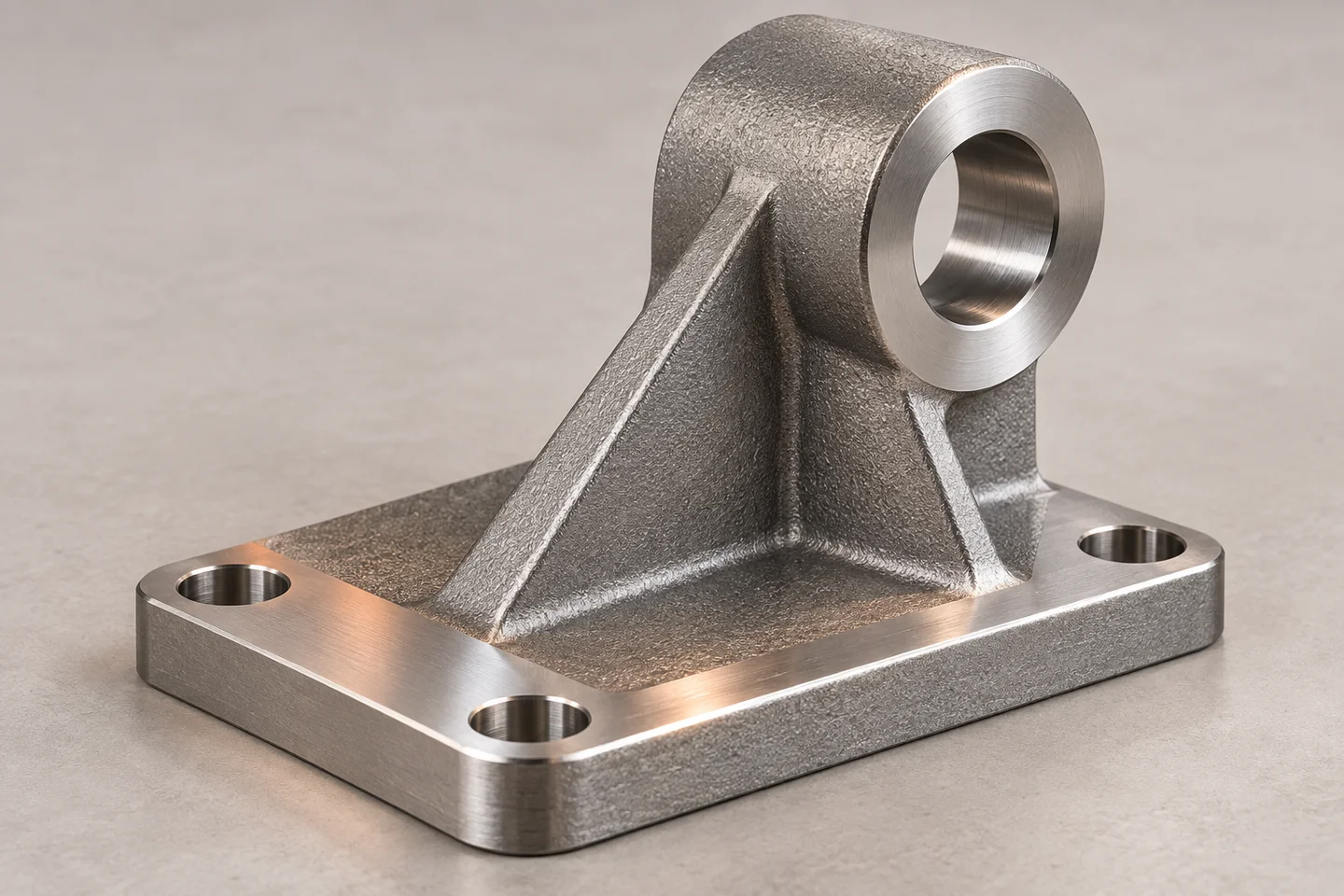
Textured cast surfaces and machined interfaces serve different functions.
03 / CASTING + MACHINING
Design the casting around the finished interfaces.
Investment casting can form the component’s overall geometry while machining establishes selected fits, threads, sealing faces and reference surfaces.
A
Define what must be machined
Identify the finished surfaces on the drawing. Agree machining stock, accessibility and workholding before the pattern tool is approved.
B
Keep the datum chain consistent
Relate bores, faces and hole patterns to a clear datum system. Review how the casting is located for the first machining operation and later inspection.
C
State the surface requirement
Use a measurable finish or agreed sample where appearance matters. Clarify cleaning, passivation or other finishing steps and how they will be accepted.
04 / QUALITY & ACCEPTANCE
Decide what evidence releases the part.
A useful inspection plan starts with named requirements. Decide which dimensions, material records and surface checks must accompany initial samples and production deliveries.
01
Initial sample approval
Agree the drawing revision, sample quantity, measurement report and any functional or appearance checks required before production release.
02
Inspection methods & limits
State the test method, acceptance criteria and relevant areas when special testing is required. “No defects” does not identify a practical inspection plan.
03
Production records
Define traceability, material documentation, inspection frequency, packaging protection and the records that must travel with the shipment.
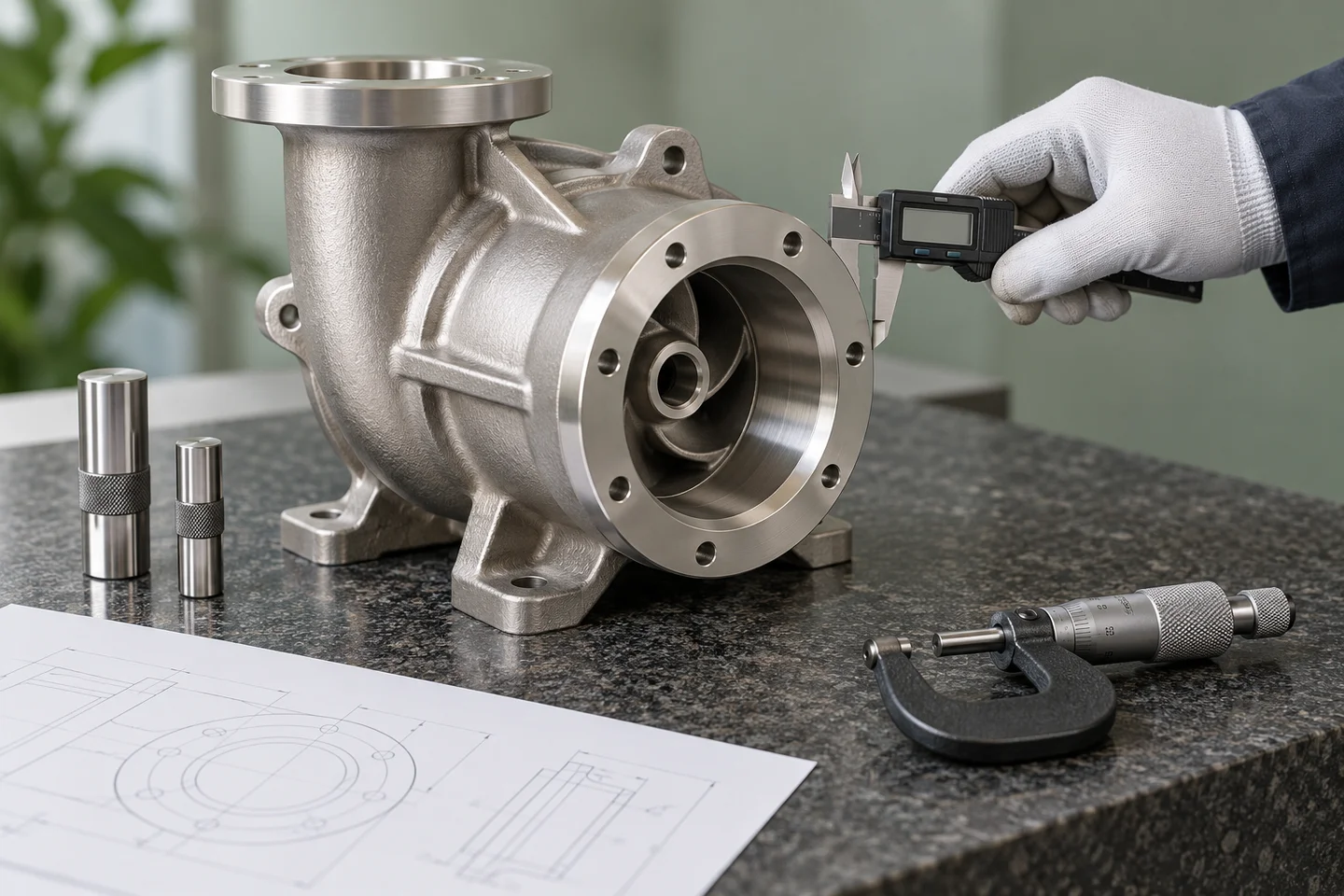
Select measurement methods around the feature and its acceptance requirement.
05 / REQUEST FOR QUOTATION
Six essentials. One coherent enquiry.
A complete RFQ helps suppliers price the same finished component. Mark unresolved requirements explicitly so assumptions can be discussed before quotations are compared.
01
Drawing & model
Send a controlled 2D drawing and matching 3D model. Identify revision, units and which document governs if they differ.
02
Material & condition
Specify the cast alloy, governing material requirements and final heat-treated or surface condition.
03
Critical features
Highlight functional dimensions, datums, machining, threads, sealed surfaces and areas with appearance requirements.
04
Order quantities
Separate prototype or sample quantities, initial production volume, expected repeat orders and annual demand.
05
Acceptance evidence
List material records, dimensional reporting, sample approval and any agreed testing or traceability requirements.
06
Delivery & commercial scope
State delivery location, target timing, packaging and what the quotation should include: tooling, samples, casting, machining and finishing.
Keep tooling and one-time charges separate from recurring piece prices. Compare the full delivered scope, including machining, finishing and inspection.
06 / CONTINUE YOUR RESEARCH
Go deeper on the next decision.
The resource library brings together process explainers, engineering checks and purchasing guides.
PROCESS ENGINEERING
Silica sol investment casting
Follow the pattern, shell, drying and quality-control decisions.
MATERIAL SELECTION
304 vs 316 stainless steel
Compare service environment, alloy specification and finished-part needs.
BUYING GUIDES
Choose an investment casting supplier
Use scope, evidence and sample acceptance to support your shortlist.
Questions about your project?
Find answers on drawings, quantities, delivery and secondary operations.
This drawing-review guide synthesizes industry guidance and practical purchasing questions. Illustrations show design principles; they are not dimensioned production drawings. NovaCast: Casting Design Considerations for Design Engineers · Investment Casting Institute: How to Design Investment Castings · Texmo Blank: Design Guidelines for Investment Casting